


Can a wearable vagus nerve stimulator actually support better sleep, stress management, and nervous system regulation?
To answer that question, I partnered with ZenoWell and spent 30 days testing Luna Plus by ZenoWell, an AI-powered, in-ear vagus nerve stimulation device, to explore how it works in everyday life. Combining daily stimulation sessions with my health data tracking, HRV monitoring, and my regular meditation practice, I recorded what I experienced, what the data revealed, and how this emerging wellness technology fit into my daily routine.
ZenoWell provided the Luna Plus device for testing and review purposes. All opinions, experiences, and observations are my own.

What is Luna Plus by ZenoWell
Luna Plus is an AI-powered Vagus Nerve wearable developed by researchers at Heidelberg University, one of Germany's top medical schools. It’s a sleek device that fits into a small pouch and can be used at home or on the go whenever you need a moment to ground yourself, reset, and support your nervous system balance.
Luna Plus uses taVNS (Transcutaneous auricular vagus nerve stimulation) technology to deliver gentle electrical impulses through the ear to stimulate the vagus nerve. The vagus nerve is a major communication pathway between the brain and body. It plays an important role in regulating involuntary functions such as heart rate, breathing, and digestion.
The wearable recently won the IFA Innovation Award 2026 in Berlin for its breakthrough in neurotech, so I was eager to see how it would work in real life.

What does vagus nerve stimulation do?
One of the most interesting things about the vagus nerve is that it has a connection to the outer ear. In fact, the ear is the only place on the human body where the vagus nerve neurons reach the skin surface. That's what makes this type of non-invasive taVNS stimulation possible by simply wearing a small earbud.

Stimulating the vagus nerve helps activate the parasympathetic nervous system, returning the body to a calmer state, often called "rest-and-digest" mode. Its main job is to signal safety and quiet down your body's stress alarms so it can naturally activate repair and recovery mechanisms.
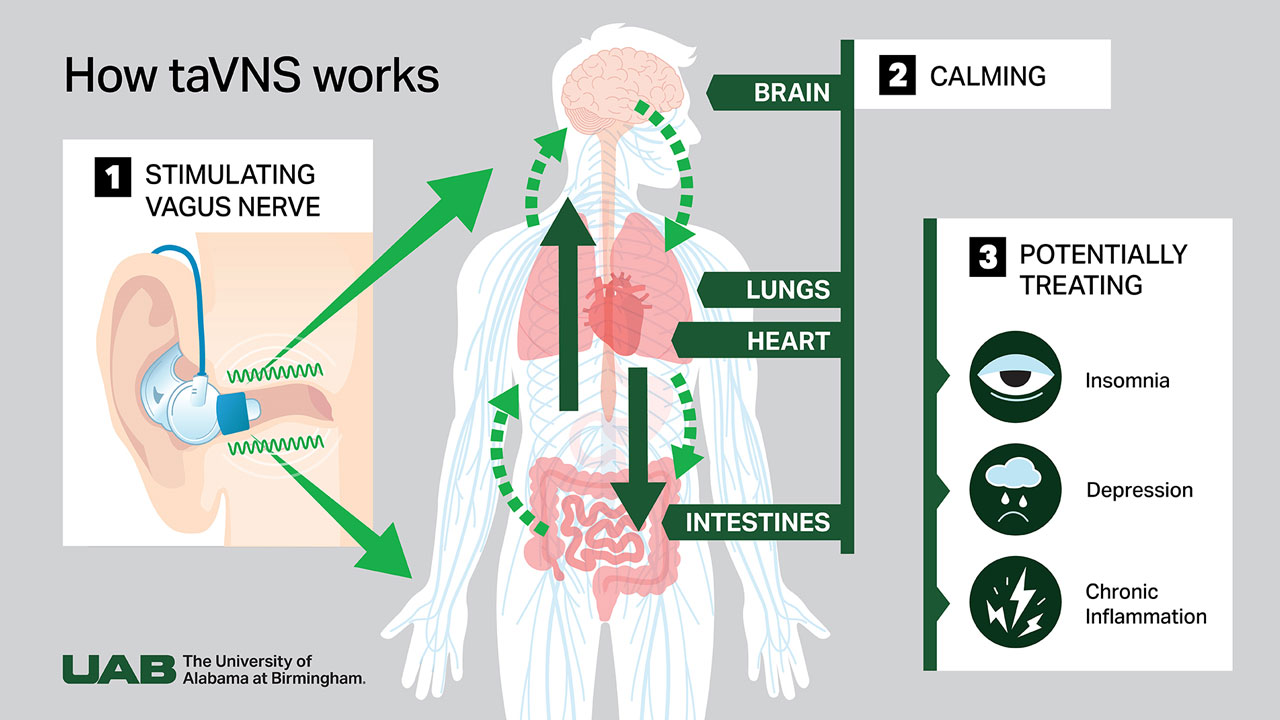
Image credit: “Why taVNS Is Transforming Vagus Nerve Stimulation,” UAB Magazine
My 30-Day Vagus Nerve Stimulation Experiment
The timing couldn't have been better. I decided to test Luna Plus during one of the busiest and most challenging periods in my life this year. I was preparing for a board exam, getting ready to launch my new book, supporting my coaching clients, and running a startup business, all at the same time.
Needless to say, I was starting to feel a little overwhelmed and thought I could use a little extra support for my well-being and, frankly, my sanity.
I wanted to see if adding vagus nerve stimulation to my daily routine could support me in two areas:
- Energy and focus: Staying sharp, focused, and energized throughout the day.
- Sleep and recovery: Winding down more easily, sleeping better, and giving my body quality rest and time to recharge.
Here's a closer look at how I set up my 30-day experiment, what my daily routine looked like, how it felt to use Luna Plus, and what my health data revealed along the way.
Key facts:
- Device tested: ZenoWell Luna Plus
- Testing period: 30 days
- Technology: Transcutaneous auricular vagus nerve stimulation (taVNS)
- Routine: 20-minute morning and evening sessions
- Tracking: Heart rate, HRV, sleep quality, mood journal
-
Main observations: noticed improved relaxation, better energy, easier bedtime transitions, and changes in tracked sleep and overall sense of well-being.
My Setup: The Hardware, AI Technology, and Good Old Meditation Cushion
To get a better picture of how vagus nerve stimulation might affect my daily well-being, I used three connected pieces of technology, along with my trusty meditation cushion.

Here's what was part of my setup:
1. Luna Plus, AI-Powered Vagus Nerve Stimulator: A sleek, in-ear device that I wore in my left ear. It delivers gentle electrical impulses to stimulate the auricular branch of the vagus nerve.
2. Zeno Smart Health Band, Biometric Tracking: A lightweight band I wore on my wrist throughout the day and night. It tracked key health metrics, including heart rate (HR), heart rate variability (HRV), and sleep.
3. Zeno AI Health App: My Personal Data Hub. The app connects both devices and brings all the data together. It analyzes my biometrics before and after sessions, tracks trends over time, and recommends vagus nerve stimulation sessions based on my current data. I could also ask it questions about my health metrics and get explanations supported by links to research.
4. Accessories for comfort
- Conductive Gel: I used a small dab of conductive gel on the ear electrode for maximum comfort and signal transmission. Water is okay to use too if you don’t have the gel.
- My tried-and-true meditation setup: a cushion, a cozy blanket, a sitting mat or folded blanket, complemented by a cup of herbal tea.
Four Modes of Neurostimulation to Support Sleep, Rest and Recovery
Luna Plus comes with four main modes, including:
- SLEEP Mode: helps shorten time to fall asleep, improves overall sleep quality;
- RELAX Mode: helps reduce stress and anxiety, promotes relaxation;
- MEDITATION (MEDIT) Mode: helps boost energy and morning focus, reduces fatigue;
- RELIEF Mode (Headaches): helps reduce intensity and frequency of headaches with regular use, according to device documentation.
ZenoWell is continually improving the experience. Since my test began, they have added new modes, including Digestion and Focus.
For the purpose of the experiment, I spent two weeks using Luna Plus in the morning with MEDIT MODE and two weeks in the evening with SLEEP or RELAX mode.
What Does Vagus Nerve Stimulation Feel Like?
If you have never used an in-ear neurostimulation device before, the sensation takes a couple of days to get used to. You can easily adjust the intensity to your comfort level, either through the app or on the device.
Here is what it was like for me, a first-time user:
Days 1–3 (Intensity Level 3): I started conservatively at intensity level 3. At first, it felt slightly strange and mildly itchy as my ear acclimated to the electrical impulses.
Days 4–7 (Intensity Level 7): As my comfort increased, I dialed the intensity up to level 7. At this level, the stimulation transforms into a subtle, soothing pulse. The best way I can describe it is like having a tiny butterfly flapping its wings inside your ear—a unique sensory feedback loop that I quickly grew to look forward to every morning.
Day 7 onward (Intensity Level 10-11): After the first week or so, I became quite comfortable at an intensity level of around 10. The subtle vibration from the stimulator also becomes more noticeable at intensity levels 7 and above.
Pro-Tip: Always apply a small drop of conductive gel to the ear electrode before inserting the device. It improves comfort, reduces prickling sensations, and ensures better skin contact, which improves the delivery of electrical signals.
My Daily Vagus Nerve Stimulation Routine
The AM vs. PM Experiment: Morning Energy vs. Evening Wind-Down

To test how Luna Plus fits into my daily life, I split my 30-day challenge into two parts: two weeks in the morning and two weeks in the evening.
The AM Morning Test: Energy & Focus (Days 1–14)
The Routine
I kept Luna Plus in its little pouch right next to my meditation cushion, so it was easy to reach first thing in the morning. Before each session, I'd apply a little gel to the ear electrode for extra comfort, pop the device into my left ear, and settle onto my cushion.
For the first 14 days, I committed to a 20-minute morning session, usually between 6:30 and 7:00 AM, shortly after waking up. I selected Medit Mode in the app, which is designed to support morning focus and energy and help you start the day feeling grounded.
I paired the session with my usual meditation practice. The Zeno app also offers gentle breathwork guidance to go along with the stimulation, but I found that I enjoyed keeping things simple. I'd close my eyes, breathe naturally, and settle into meditation while noticing the gentle, rhythmic electrical pulses and vibrations around my ear.
For me, that was the most enjoyable way to experience it. But you can experiment with the breathwork guidance or create your own little morning ritual.
What I Noticed
Here are some observations over the first two weeks:
- More sustained energy: I felt like I had a steadier energy throughout the day and was less fatigued.
- Changes in HRV: My heart rate variability readings appeared more stable and showed some improvement over the testing period.
- A deeper meditation experience: The gentle stimulation gave me something physical to focus on, which seemed to help me settle into meditation more easily and experience a deeper sense of stillness.
Screenshot: my HRV trend over the first week with daily sessions:

See my detailed Week 1 and Week 2 posts on Instagram for more info.
The PM Evening Test: Rest & Recovery (Days 15–30)
The Routine
For the second half of the experiment, I switched things up and moved my sessions to the evening. I kept Luna Plus on my nightstand and made it part of my bedtime routine.
Depending on the Zeno AI Coach's recommendations, I'd choose either Relax Mode or Sleep Mode and run a 20-minute session right in bed, just before going to sleep.
Screenshot: goal-setting and tracking with Zeno AI Wellness App:

What I Noticed
Working from home can blur the lines and make it hard to switch off. Sometimes the workday bleeds into the evening, and your brain keeps running long after you've closed your laptop. This little ritual gave me a physical cue to slow down, disconnect from work, and make space for rest.
A few things stood out:
- Easier wind-down: I found it easier to let go of the day's mental chatter and settle into bedtime.
- More restorative sleep: I felt like I was sleeping more deeply and waking up feeling more refreshed.
- Encouraging sleep data: My Sleep Score, as recorded by the Zeno health tracker, climbed from the low 80s into the high 90s during the testing period.
My Zeno Sleep Score over the testing period:

The nose-dives in my sleep score shown in the screenshot happened on days when I had a drink or a glass of wine. It’s amazing to see how quickly alcohol wreaks havoc on my sleep.
The Data Trends: HRV, Heart Rate and Sleep – My 30-Day Results
One of the things I was most curious about was whether I'd see any changes in my health data to go along with how I was feeling.
The Zeno Smart Health Band tracked my daily metrics, including heart rate, heart rate variability (HRV), and sleep. And if you don't have a Zeno band, no worries! You can also connect a compatible smartwatch, such as Garmin, through the Zeno app and pull in your existing health data.
At one point, I got a little carried away with tracking and started wearing both my Garmin and the Zeno band at the same time. Naturally, I wanted to compare the numbers! I won't get into the differences between their individual measurements, but what I found interesting was that both devices generally reflected the same direction of change: whether my HRV was trending up or down, or my sleep quality was improving or declining.
Before we dive into the numbers, a quick note: the data below is simply a snapshot of what I recorded during my personal 30-day experiment. It's not a clinical study, a performance benchmark, or a promise of what someone else might experience. I’m sharing it to give you a better idea of the changes I observed and how I tracked them.
My biometric data: Before and after sessions
|
Metric |
Before session |
After session / observed peak |
What I noticed |
|---|---|---|---|
|
Heart Rate (HR) |
70–75 BPM |
55–62 BPM |
My heart rate dropped during the session, suggesting a shift toward a more relaxed state. |
|
Heart Rate Variability (HRV) |
30–40 ms |
40–74 ms |
Readings fluctuated from session to session, but the overall trend was upward. |
|
Sleep Score |
Average: 78/100 |
Peak: 95/100 |
My sleep score improved during the tracking period, with my best recorded score reaching 95. |
Note: These are personal observations from my testing period, not clinical measurements or evidence that vagus nerve stimulation alone caused the changes.
My Key Health Data Takeaways

A few things I'd like to highlight after my 30-day experiment:
- Heart rate typically slows down after sessions: During some morning sessions, my heart rate dropped from an elevated 86–94 BPM range (after I did my pushups) to around 55–62 BPM. It was interesting to see how quickly those numbers changed while I was sitting quietly and meditating.
- HRV trends: My HRV fluctuated throughout the experiment, sometimes going down after a session and sometimes climbing. On Day 10, for example, my HRV was in the mid-30s before my morning session and reached the 70s within about 40 minutes afterward. Overall, though, the trend during my testing period was upward.
- Sleep scores: Even on nights when I got slightly less sleep because of a busy schedule, my Sleep Score sometimes reached 90+ out of 100.
- HRV fluctuations are normal: I also noticed that my HRV sometimes dipped after a session before returning to its usual range. When I asked the Zeno AI Health Coach about this, it shared studies suggesting that research on the effects of neurostimulation on HRV is still evolving and that fluctuations are normal. It was a good reminder not to interpret every dip or spike as a sign that something is going wrong.
My biggest takeaway: Don't get too caught up in the numbers or try to interpret every little change. Use the data as one piece of the picture, but pay attention to how you actually feel. Are you more relaxed? Are you sleeping better? Do you feel more energized or better able to handle stress? Those everyday changes matter the most.
Is Luna Plus Worth It? Does Vagus Nerve Stimulation Work?
After 30 days of testing, here are my key learnings:
Consistency matters: Building a more resilient nervous system is a bit like physical training. It takes regular practice. Having a simple 20-minute routine made it easier for me to show up for myself every day.
Actionable insights: I found the Zeno AI app particularly useful. It doesn't just collect health data; it helps me make sense of it, spot patterns, and think about how I might adjust my daily routines.
The Zeno Smart Health Band: It's sleek, lightweight, and comfortable enough to wear almost all the time. I actually like how it looks and feels, more like a stylish bracelet than a typical fitness tracker. The only downside is that I can't wear it while surfing!
An AI wellness advisor: One feature I really enjoyed was being able to ask the Zeno AI Coach about my daily health data and wellness practices. Whether I wanted to explore how meditation, yoga, or yoga nidra showed up in my metrics, prepare an evening session, or simply get a little encouragement to stay consistent, it felt like having a smart accountability tool supporting my progress.
But more than anything, I appreciated the quiet moments this little device created in my day.
Knowing I could put Luna Plus in my ear, step away from everything for 20 minutes, and dedicate that time to my well-being became something I genuinely looked forward to. It gave me a physical reminder to pause, check in with myself, and make my health a priority.
I also enjoyed chatting with the Zeno AI Coach. I'd ask things like, "Prepare my evening session," or "Look at my data and help me understand what it means." Having a tool that could help me review my progress, explore patterns, and stay accountable made the experience feel more engaging than simply wearing another health tracker.
Overall, I found Luna Plus to be an enjoyable addition to my at-home wellness routine. I used it during my morning meditation, evening wind-down, yoga sessions, and even while watching TV. There are plenty of ways to experiment and find a rhythm that works for your lifestyle.
The combination of in-ear vagus nerve stimulation, biometric tracking, and AI-powered insights makes for an interesting approach to exploring your nervous system and everyday well-being.
While my 30-day experience can't claim that the device caused the changes I observed, I enjoyed the routine, the insights, and the opportunity to become more curious about how my body responds to different wellness practices.
Ready to Give It a Try?
If you're curious about exploring vagus nerve stimulation as part of your own sleep, stress management, or meditation routine, the ZenoWell team shared a special discount for the Meditate Mate community.
Use the code MeditateMate at checkout on the official ZenoWell website to receive a special discount on the award-winning wellness wearables. You can also compare prices and shop ZenoWell products on Amazon.
*Note: This article contains affiliate links. We may earn a small commission if you purchase through these links, at no extra cost to you. All opinions are our own.

About the Author

Olga Pinn is a health and wellness coach, author of Stress Protection Factor, and mindfulness teacher with an MIT certification in Artificial Intelligence (AI). She explores, tests, and shares wellness technology and AI tools for modern well-being. In her free time, you can find her meditating, reading, and surfing waves in the Pacific Ocean.

Leave a comment